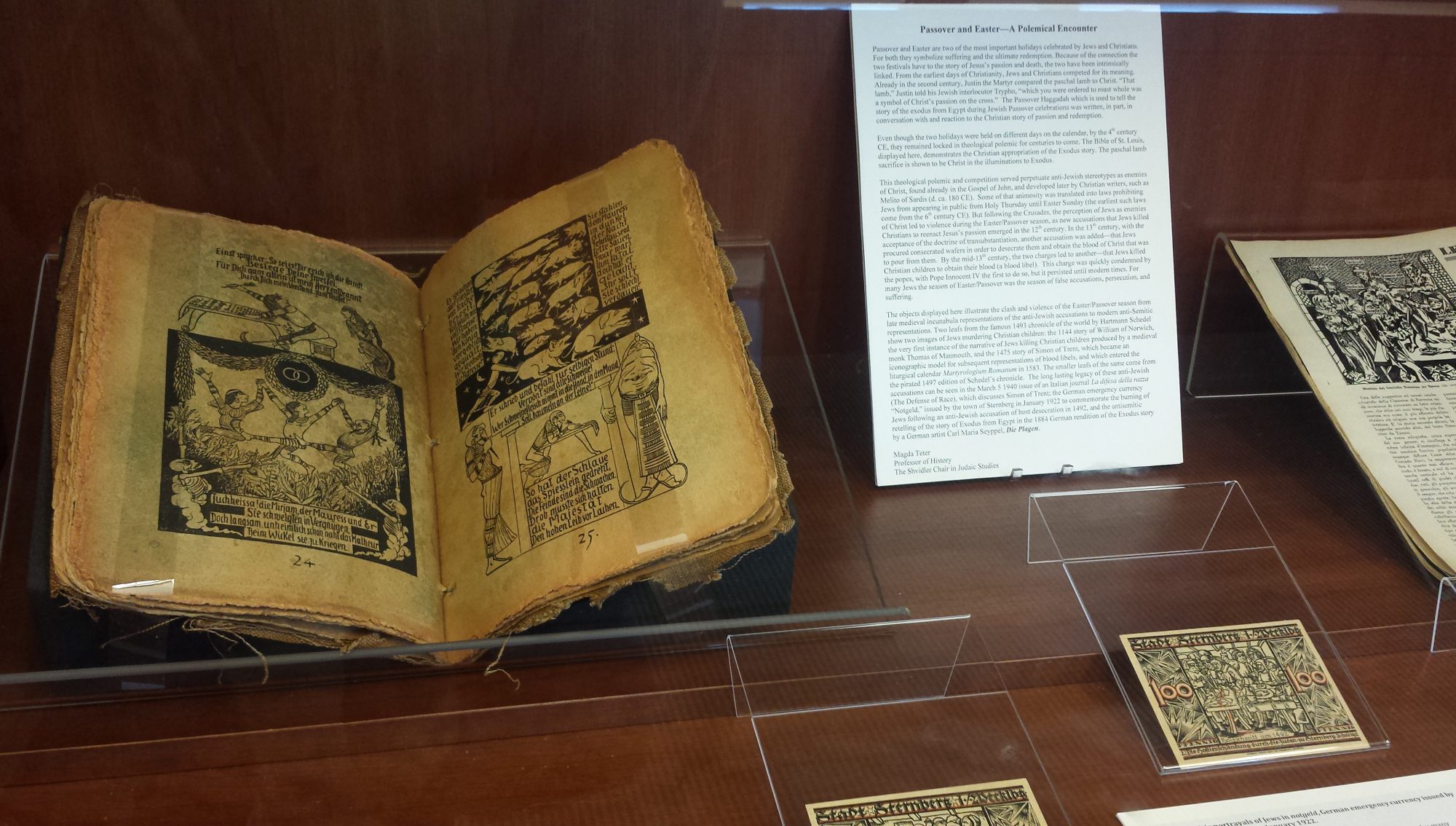

A new pop-up exhibition in the Walsh Family Library

We live in a world engulfed in crises: global war, climate disasters, and political discord. Many of us feel despair. This exhibit highlights the wisdom imparted by Bronx teenagers writing in the 1940s. In their high school yearbooks, they share hopes and take responsibility for taking steps for the future. Some of their thoughts still resonate today, some show us how our society has changed since they wrote these words.

Eugene Friedman, graduating in 1941, in the middle of World War II, from the Roosevelt High School on East Fordham Road, right across from Fordham, acknowledged “a critical period of world history,” he and his friends were living through, a period in which “civilization appears to be retrograding.” But he exhorted his classmates not to “be depressed by the trend of world affairs” and not to “question ‘What use [is] civilization, if destruction is running rampant, and all is to be destroyed?’” Friedman was, like many of his time, a believer in the progress of “civilization” and expressed confidence that the world would “resume its normal trend” after the war.

The crisis of the war made Dorothy Gerder from the 1944 class in Roosevelt High School aware of a shared sacrifice. She wrote of “a man in dirty overalls with a dinner pail…on his way to the night shift to build planes…. A woman, her hair silver gray…her sons out there somewhere serving Uncle Sam…. a little boy, his mouth wide open…he doesn’t know, but on his shoulders rests the salvation of the world….”

After the war students reflected on the destruction and hoped for a better future.
In her essay for the 1946/47 issue of Olinville Star, a semi-annual publication of the Olinville Jr. High School in the Williamsbridge section of the Bronx, the teenage June Gray declared, “The biggest problem in our lives today is the future. We discuss and plan what we are going to do. We know that unless we preserve our democracy, learn to leave with others, all races and creeds together, there may not be a future for any of us.” Although written decades ago, just over a year after World War II ended, June Gray’s essay resonates for our times. “Our age is a fearful one,” she continued. “The common understanding among men has not been achieved. This should be our goal.” Gray compared democratic and non-democratic countries: “Learning to be a citizen ina democracy is an endless job. One must constantly seek the truth and try to do what is good for all men. Learning to be a citizen of a non-democratic country is a comparatively easy task. Thinking is done for you by someone else….There are consequences to this. Freedom of opportunity, speech, religion, press and all the other freedoms, citizens of the United States of America hold dear to heart, are not known.” Gray saw the importance of knowing “true facts” as a way to “eliminate prejudice from the earth.” She called on her friends to “Remember–the world is getting smaller–we must learn to work together.”

Hope and ideals for a better world are also tangible in the Senior Saga publication by the class of 1947, graduating from the Roosevelt High School, across from Fordham on E. Fordham Road. Dedicated to the United Nations, a recent organization created in the aftermath of World War II. The class, through the pen of the dedication’s author, Phyllis Rose, committed itself to the values assuring “world peace”: “to reaffirm faith in fundamental human rights, in the dignity and worth of the human person, and in the equal rights of men and women of nations large and small; to promote social progress and better standards of life in larger freedom; to practice tolerance and to live together in peace with one another as good neighbors.” The students promised to “strive to prevent injurious talk of intolerance and propaganda by listening only to what we know to be the truth, and by speaking only the truth.”

The motto on above the entrance says “Where Law Ends, Tyranny Begins, William Pitt”

And a year later, in 1948, Norma Reiss and Sheila Wachsler from the James Monroe High School asked “What kind of day will tomorrow be? Will the Sun shine on the countries of the world as they join hands to accomplish their ideals, witnessing for the first time in history, peace and equality for all? Or will the storms of hate engulf the mind of the people that they can no longer see the Sun?” They wrote ready to “take over responsibilities” and “become the leaders of tomorrow.”
