Fordham’s Center for Jewish Studies is delighted to welcome new fellows in 2021-2022. This cohort represents the interdisciplinary depth of Jewish Studies. For the past few years, Fordham has partnered with several institutions – Columbia University’s Institute for Israel and Jewish Studies, the Center for Jewish History, and the New York Public Library – to make these fellowships possible. We are looking forward to a thought-provoking year of learning together.
Rabin-Shvidler Post-Doctoral Fellow in Jewish Studies at Columbia and Fordham:
- Samuel Shuman, Ph.D. University of Michigan
“Cutting Out the Middleman: The Diamond Industry & the Politics of Displacement in a European Port-City”

Sam Shuman is an anthropologist of religion, politics, and economy, who studies the shifting role of historical merchant diasporas in the age of supply-chain capitalism. At Fordham, he will teach two courses in the Anthropology Department, and develop his dissertation into a book manuscript. His book will focus on the relationship between Antwerp’s Jews and the diamond industry as a way to rethink politics in contemporary Europe.
2021 Salo Baron New Voices in Jewish Studies Award Recipients:
- Daniella Farah, Ph.D. Stanford University
“Forming Iranian Jewish Identities: Education, National Belonging, the Jewish Press, and Integration, 1945-1981”

Daniella Farah’s scholarship lies at the intersection of modern Jewish history, education history, Middle Eastern history, and transnational studies, focusing on Jewish-Muslim relations and Jewish identity formation in twentieth-century Iran and Turkey. By applying a transnational approach to the history of Jewish education, her work asks what bearing language and access to education had on Turkish and Iranian Jews’ abilities to integrate into and claim belonging to their respective nation-states. Daniella will be Samuel W. and Goldye Marian Spain Postdoctoral Fellowship in Jewish Studies at Rice University.
- Jeremiah Lockwood, Ph.D. Stanford University
“Golden Ages: Chassidic Singers and Cantorial Revival in the Digital Era,”
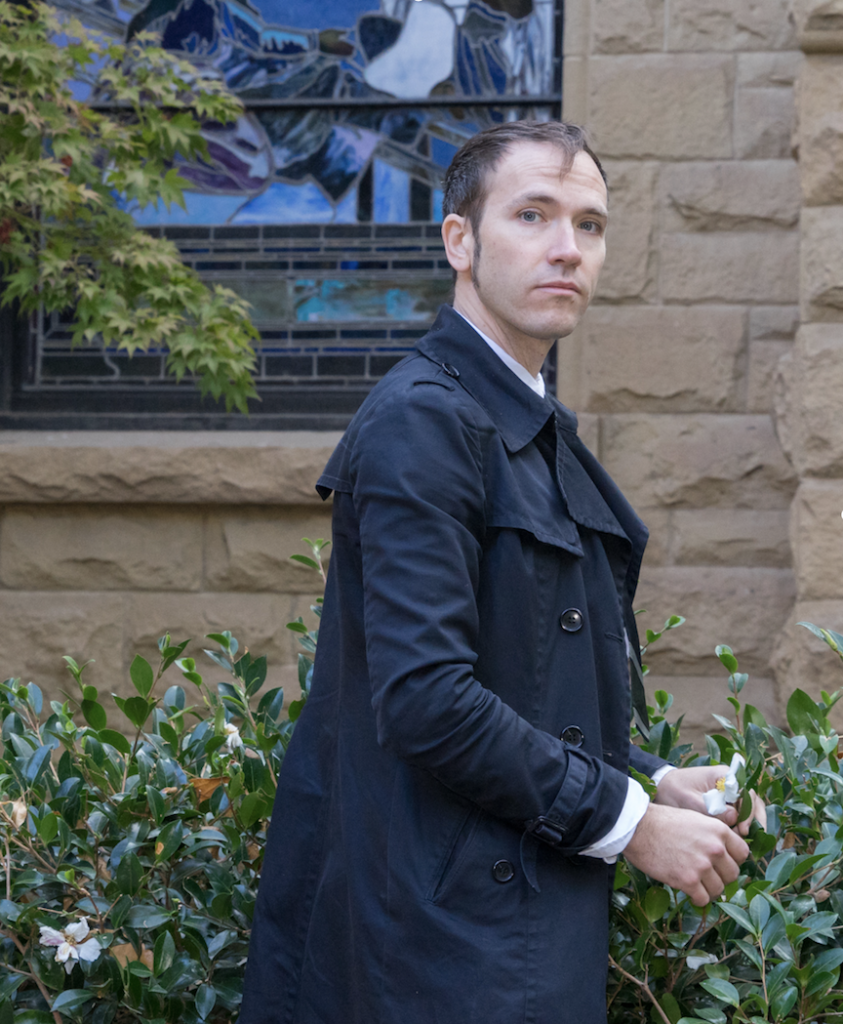
Jeremiah Lockwood’s research argues that a cadre of young Chassidic singers who have embraced a style of early 20th century recorded sacred music illustrates the contested nature of prayer practices in the contemporary Jewish American community. His thesis offers a picture of artists who surface sounds of the Jewish sonic past as a means of aesthetic self-cultivation and a utopian effort to revive an approach to prayer characterized by the transportive experience of listening. Beyond a revival of musical style, their work with the archive of early Jewish records attempts to reanimate a form of comportment in prayer based in an imagined Jewish past in which aesthetics and prayer were integrated and the role of artists was foregrounded as communal leaders facilitating the experience of listening as a sacred act. Jeremiah is currently Associated Researcher at UCLA’s Department of Ethnomusicology.
- Alex Moshkin
“Russian-Jewish Culture in Israel: In Search of Identity”
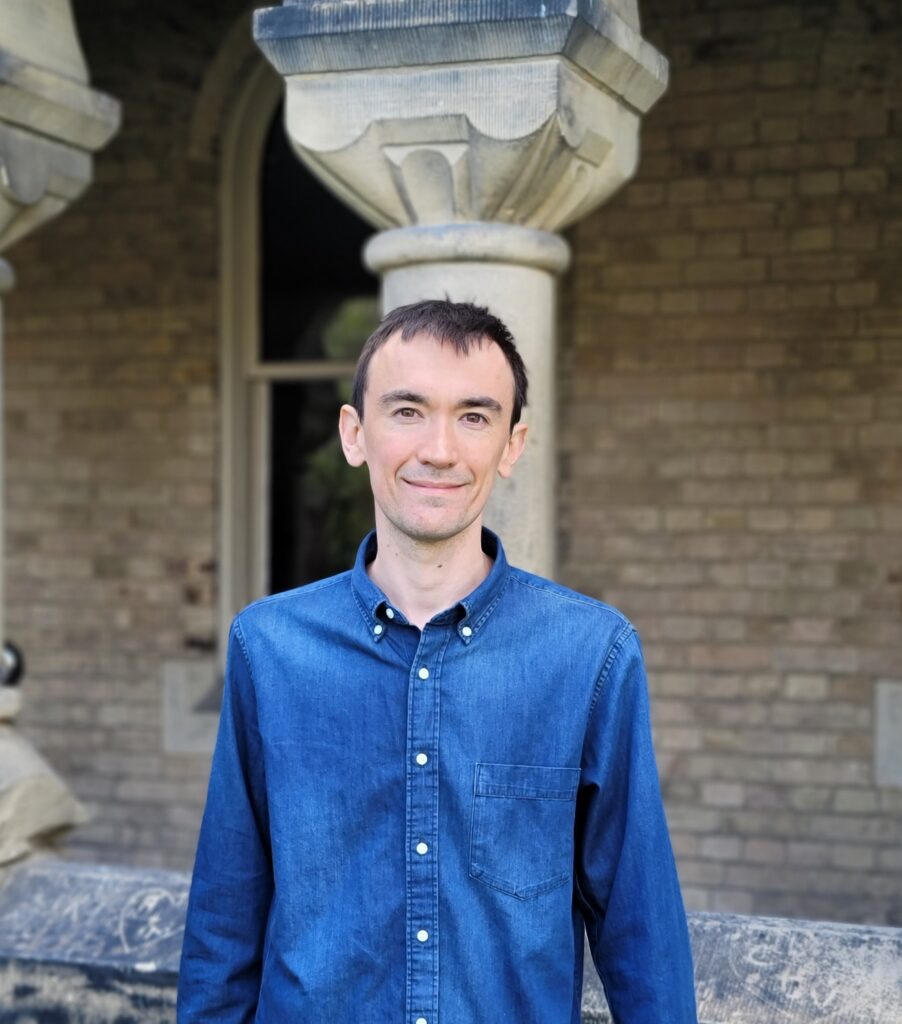
Alex Moshkin’s research examines the largest outpost of Russian-Jewish culture in the twentieth century—that of Israel. His dissertation, “Russian-Jewish Culture in Israel: In Search of Identity,” which he wrote at the University of Pennsylvania, tells the story of how Russian-speaking writers and artists sought to forge a Jewish/Israeli cultural identity after their immigration to Israel with a divided and often vague understanding of this identity-in-the-making. In analyzing this cultural output, Alex shows how engagement with Soviet history, Jewish religious tradition, ideas of cosmopolitanism, and the institution of the Israeli army has allowed Russophone artists in Israel both to inscribe themselves as part of the Jewish population and to insist on their unique, hyphenated Russian-Israeli identification. Alex will be Assistant Professor of Comparative Literature at Koç University in Istanbul.
- Sarah Zager
“’I Will Sing of Love and Justice’: Jewish Responses to the Theological Roots of Contemporary Virtue Ethics”

Sarah Zager is a scholar of philosophy, religion, and Jewish thought. Her Yale dissertation puts Jewish philosophy into conversation with contemporary ethical theory in order to develop a novel account of the relationship between moral rules and character development. While much of the philosophical conversation to date has assumed that we can understand ethics either as a system of rules (deontology) or as a discourse about character-formation (virtue ethics), Sarah uses the work of Maimonides , Moses Mendelssohn, and the nineteenth-century Musar thinkers Israel Salanter and Simhah Zissel Ziv to show that we can productively combine virtue ethical and deontological approaches, arguing that these thinkers provide us with useful resources for addressing problems in contemporary moral conversation, including those of race and gender. She is also working on a project on the role of abstract thinking in feminist thought and Jewish philosophy, focusing especially on experiences of infertility and pregnancy loss.
Fordham-NYPL Mid-Term Research Fellow in Jewish Studies:
- Ephraim Shoham-Steiner, Ben Gurion University
“The ‘Holy Community of Cologne’: New Perspectives on the Medieval Jewish Community
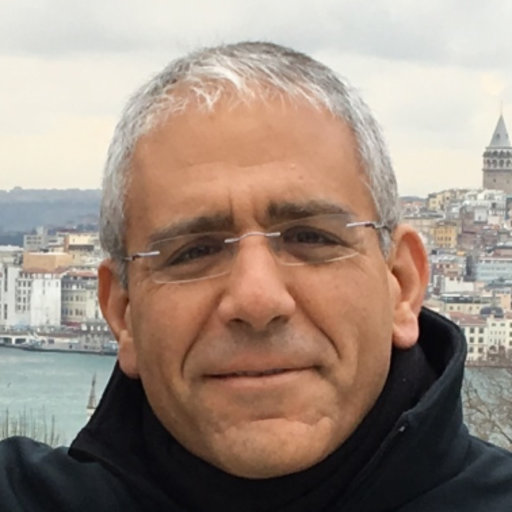
Cologne is one of the only Jewish communities in medieval Europe that received serious and meticulous archeological attention. The Cologne Judenviertel (Jewish quarter) located at the heart of the city’s historical center in close proximity to the city hall (Rathaus) was excavated twice over the past 60 years. One of the earliest scholars studying Cologne was Adolf Kober (1879-1958), and Ephraim will study pertinent materials relating to him and by him that are held at the NYPL and the Center for Jewish History in New York.
Fordham-NYPL Short-Term Research Fellows in Jewish Studies:
- Tamara Gleason-Freidberg, University College London
“‘Our Golden Chain in Broken’: Responses to the Holocaust in theh Bundist Journal Foroys from Mexico (1941-1947)”

Tamara Gleason-Freidberg will explore the variety of texts about the Holocaust that appeared in Foroys, a Yiddish journal published by a group of left-wing activists who had founded the association Kultur un Hilf in 1941 as a Mexican branch of the Jewish Labour Committee, which had been established in New York City. During her time at the NYPL, Tamara will focus on texts published in Foroys between 1941-1947, with a special focus on articles and poems that tried to explain the significance of the annihilation of Eastern European Jewry, analyzing the specifically Jewish Mexican context of these Yiddish publications.
- Zohar Segev, University of Haifa
“Philanthropy, Politics, and the Shaping of a Nation: The Nathan Straus Papers in the NYPL”

Nathan Straus is most known for his co-ownership of Macy’s and his promotion of the pasteurization of milk in the USA and in Palestine. The projects Straus initiated and funded in Palestine exemplify the dramatic transformation in the reciprocal relations between US Jews and Jewish communities in Europe and Palestine during the interwar period. Zohar Segev’s research at the NYPL, which holds the Nathan Straus Papers, will examine the full scope of Straus’ philanthropic work in Palestine.
- Sharon Weltman, Louisiana State University
“Elizabeth Polack: British Melodrama and Jewish Emancipation”
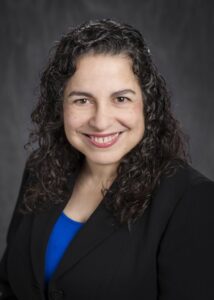
Elizabeth Polack was the first Anglo-Jewish woman playwright, and perhaps the first Jewish woman dramatist in any language. Her melodramas appeared in print and on the London stage from 1835 to 1838. But very little is known about her. Sharon Weltman aims to fill that gap, recovering forgotten plays and investigating how a Jewish woman found an audience in London’s theater scene when Jews had almost no civil rights, were typically reduced to antisemitic stereotypes on stage, and when women playwrights faced serious obstacles to production and publication. Polack’s use of melodrama in the context of a decades-long fight for Jewish emancipation helped bring Britain to the condition of a modern state where all adults hold equal rights under the law.
Associate Fellows in Jewish Studies:
- Emmanuel Bloch
“Modesty: Halakhah, Meta-Halakhah and Historical Development in the Twentieth Century”
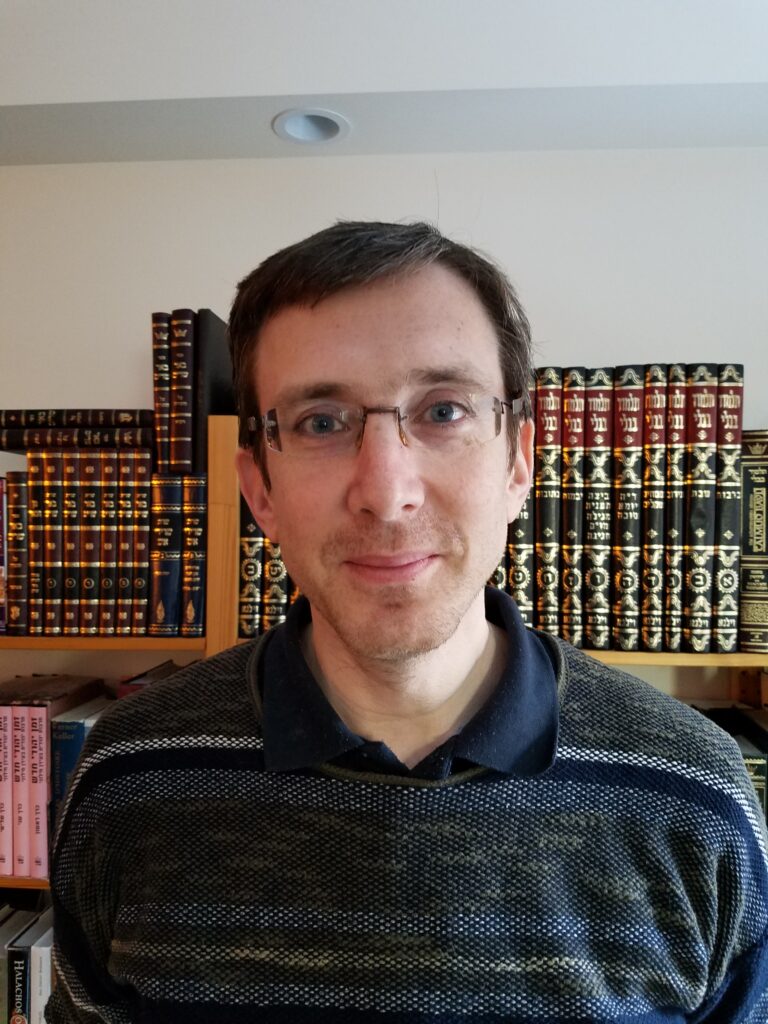
Emmanuel Bloch’s research analyzes the concept of Tsniut, understood as modest female dress, in the halakhic realm, demonstrating that Tsniut underwent a process of halakhization in the middle of the twentieth century and shedding light on the social context surrounding this metamorphosis. His work uses the concept of Tsniut to explore how Jewish law changes (including the strategies employed to generate new halakhic rules) and as a lens through which to study the internal dynamics of twentieth- and twenty-first century Orthodoxy.
- Ayelet Brinn
“”Tailors, Old Jews, and Women: Gender, Mass Culture, and the Rise of the American Yiddish Press”

Ayelet Brinn is an American Jewish historian with an expertise in gender and popular culture (and a past Rabin-Shvidler Post-Doctoral Fellow at Fordham and Columbia). Her research explores the role of the Yiddish press in mediating between American and Jewish cultural spheres. Her current project investigates the crucial role that questions of women and gender played in the development of the American Yiddish press.
- Yehudah B. Cohn
“Immanuel of Rome: Hebrew Sonnets from the Early Renaissance”

Yehudah B. Cohn is currently finishing a book titled Immanuel of Rome: Hebrew Sonnets from the Early Renaissance, an annotated translation into English of Immanuel of Rome’s Hebrew sonnets. The aim is to render these Hebrew sonnets in iambic pentameter – the classic meter of the English sonnet – while retaining the rhyming scheme of the originals. The notes will focus on the allusions in the Hebrew, whether to the Bible, rabbinic literature or earlier medieval works.
- Dana Fishkin
“Between Rome and the Adriatic: Immanuel of Rome and the Relationship Between Jews of Rome and the Marches in Medieval Italy”

Dana Fishkin’s research examines the work and life of Immanuel of Rome, a well known polymath, poet, exegetist, best known for Mahbarot Immanuel (Immanuel’s Compositions), a miscellany of rhymed prose tales interspersed with metric poetry. The Mahbarot contains an encyclopedic range of content, including the earliest known Hebrew sonnets and a Hebrew version of Dante’s Divine Comedy.
- Ben Ratskoff
“Waltzing with Hitler: Black Writers, the Third Reich, and Demonic Grounds of Comparison, 1936-1940”
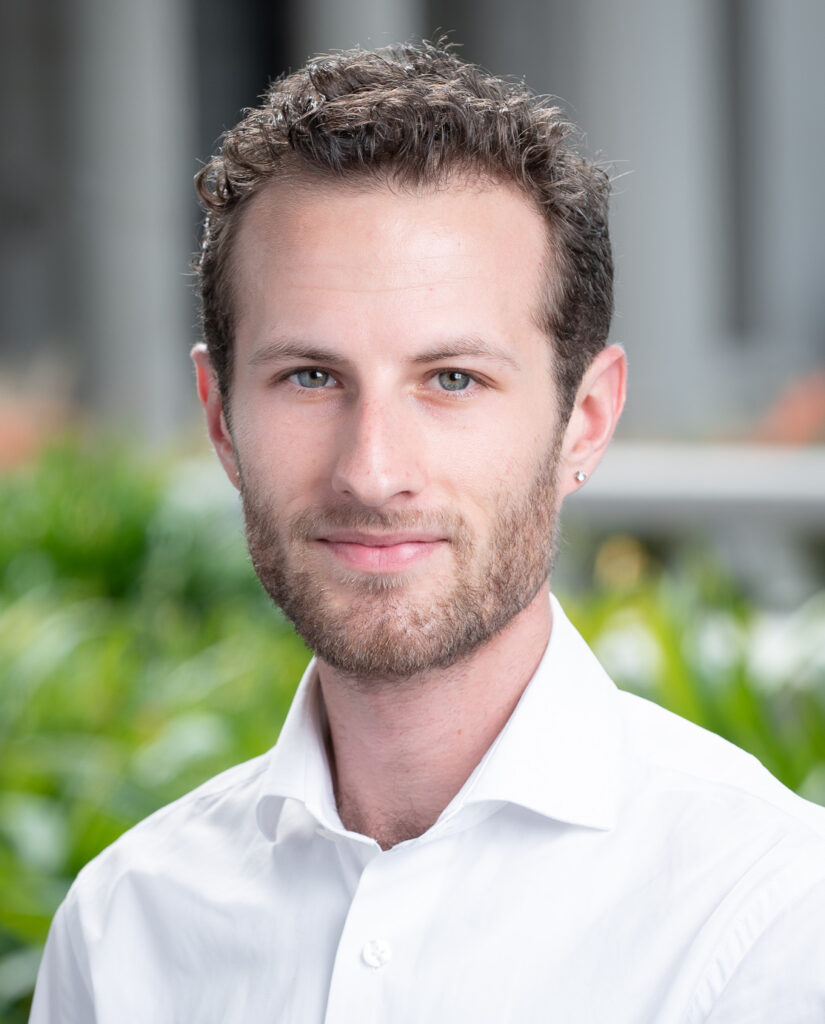
Ben Ratskoff’s recent dissertation, “Waltzing with Hitler: Black Writers, the Third Reich, and Demonic Grounds of Comparison, 1936-1940,” examines how Black writers in the United States and French Empire represented Nazism in real-time, in journalistic writing, poetry, and novels. His research focuses on the intersections of Black Studies and Jewish Studies, with particular interest in the relationship between antisemitism, white supremacy, and colonialism.
- Eli Rosenblatt
“Enlightening the Skin: Travel, Racial Language, and Rabbinic Intertextuality in Modern Yiddish Literature”

Eli Rosenblatt studies the Jewish Atlantic world less as a geographic space and more as a coherent system of exchange and interaction, where Jewish bodies, texts, ideas, theologies, pathologies, commodities, and technologies were regularly exchanged among the four continents of North and South America, Europe, and Africa. He places this Jewish Atlantic world in the context of the Black Atlantic world. He is completing a book manuscript on Yiddish literature in its colonial contexts, as rooted in the Jewish Enlightenment and covering the major aspects of Yiddish cultural production in the Black Atlantic world, and beginning to work on his second book project on the Ashkenazi Jewish community in Paramaribo, Suriname after the abolition of slavery in 1863 until World War II.